AlkaTide Official Website › Blog › 250 mg vs A Tablespoon
250 mg vs a Tablespoon: The Apple Cider Vinegar Dose Question
This is the post that costs us something. AlkaTide prints 250 mg of apple cider vinegar on its panel, which is better disclosure than most of this category manages, and it is well below what the trials everybody cites actually used.

- One AlkaTide gummy carries 250 mg of apple cider vinegar, printed on the Supplement Facts panel.
- A tablespoon of vinegar is about 15 ml, roughly 750 mg of acetic acid at typical strength.
- The trials used one to two tablespoons daily — several times what a gummy contains.
- A printed number is still worth a lot. Most of this category hides behind a proprietary blend, and you cannot check what you cannot see.
General information, not medical advice. AlkaTide is a dietary supplement for healthy adults 18 and over. It is not a drug, it is not FDA-approved, and it is not intended to diagnose, treat, cure or prevent any disease. If you take medication for blood sugar, have a diagnosed condition, or are pregnant or nursing, speak to a clinician before using any apple cider vinegar product.
The number on the AlkaTide panel
Apple Cider Vinegar, 250 mg. That is the entire active panel on this label. The five other named items — cane sugar, glucose syrup, water, pectin and citric acid — are what turns a powder into a chewable. None of them is doing anything the vinegar research concerns.
That single-active structure is rarer than it looks. Walk any supplement aisle and most competing products list eight or ten botanical names with no individual amounts beside them. Whatever else is true here, you can read this label and know what you are buying. The full panel, ingredient by ingredient, is on our AlkaTide ingredients page.
What a tablespoon of vinegar actually contains
A US tablespoon is about 15 millilitres. Ordinary vinegar runs at roughly five to six per cent acetic acid by volume, which puts a tablespoon in the region of 750 milligrams of acetic acid — the compound the research is actually about.
Two tablespoons, which is what the longest trial used at its upper end, lands around 1,500 mg. Hold that range in mind — roughly 750 to 1,500 mg of acetic acid a day, because it is the region every finding in this literature was produced in.
The four trials, and what each one dosed
Four human studies come up almost every time apple cider vinegar is discussed. They are real and they are worth reading. Their doses are the detail that marketing copy drops.
| Study | Dose used | Form | What it measured |
|---|---|---|---|
| Kondo 2009 | 15–30 ml daily, 12 weeks | Liquid | Body weight, body fat, triglycerides |
| Johnston 2004 | 20 g with a meal | Liquid | Insulin sensitivity after carbohydrate |
| Ostman 2005 | With a bread meal | Liquid | Glucose, insulin, reported satiety |
| Hlebowicz 2007 | Pilot dosing | Liquid | Gastric emptying rate |
| One AlkaTide gummy | 250 mg ACV | Chewable | Never tested as a finished product |
The 2020 systematic review pooled the safety and metabolic literature and drew measured conclusions from it. Measured is the right register for this ingredient, and any page that reaches for a stronger one is reaching past its evidence.
Why the conversion is not clean arithmetic
It would be convenient to say that 250 mg is one third of a tablespoon and leave it there. That is not quite honest, for three reasons that all point the same way.
- Milligrams of apple cider vinegar are not milligrams of acetic acid. A gummy label gives you the first; the research is about the second. What proportion of those 250 mg is acetic acid is not published on any gummy label we have seen, ours included.
- “Apple cider vinegar” in a gummy is usually a dried powder. Getting liquid vinegar into a chewable means drying it onto a carrier, and the concentration of that powder is a manufacturing detail, not a label figure.
- Dose–response curves are rarely linear. A third of a dose does not reliably produce a third of an effect. It can produce most of it, or none.
What none of that does is change the direction. The trials used substantially more. We cannot tell you how much more in a single clean ratio, and we are not going to invent one to make the gap sound smaller.
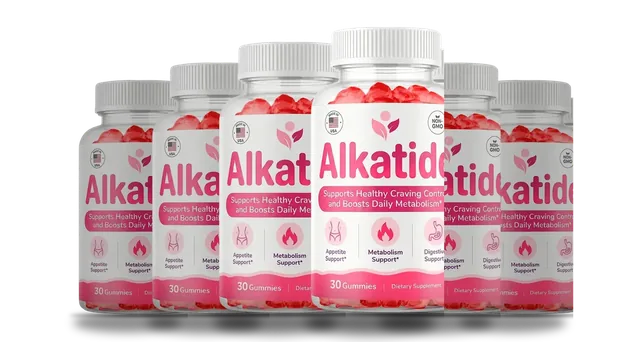
A label that prints its number.
Whether 250 mg is enough is a fair question. That you can ask it at all is the point — most of this category will not tell you.
$294 for six bottles at $49 each
Order AlkaTide On The Official WebsiteFree US shipping · six digital bonuses · 60-day money-back guarantee
Why a printed dose is still worth having
Having spent five sections on the shortfall, here is the other half, and it matters.
A number on a panel is checkable. You can set 250 mg beside Kondo and form your own view, exactly as this article has. You can compare this bottle against the one next to it on a shelf. You can notice if the formulation changes next year. None of that is possible with a label that says “proprietary blend, 900 mg” and lists nine botanicals underneath.
The FDA's own page on dietary supplements is worth reading on what a Supplement Facts panel is and is not required to tell you. The short version: less than most buyers assume. A manufacturer that discloses more than it must is making a choice.
Proprietary blends, and the check this label passes
A proprietary blend is legal, common, and designed to be uninformative. It gives you one total weight for several ingredients in descending order, and no individual amounts. The cheap ingredient can be almost all of the weight and the impressive one a token dusting, and nothing on the label will tell you which.
Run the seven checks in our guide to choosing a gummy supplement across this category and the first one — is the active amount printed? — eliminates most of the shelf before you have read a single claim.
Where the manufacturer's own marketing overstates the label
One thing we will not do is pretend this is unambiguous. The manufacturer’s sales page describes “a balanced blend of actives”. The panel names one active and five base ingredients. Those two sentences cannot both be right, and the label is the one printed on the bottle you receive. We have said the same on our about page, because a distributor that only quotes the flattering half of its supplier’s copy is not a source you should trust on anything else.
What 250 mg might still do
Not nothing, necessarily. Three honest possibilities, none of them proven for this product.
- The timing may carry weight the dose does not. The label asks for the serving twenty to thirty minutes before a meal, which is how the acute studies were run. Whether a smaller amount at the right moment does anything is an open question rather than a settled no.
- Daily consistency is worth something. A modest amount taken 30 days a month is a different exposure from a large amount taken nine times before you gave up.
- The routine has its own effect. A full glass of water before eating changes the meal. That is not acetic acid, but it is not nothing either.
Where the evidence genuinely stops is marked on our how AlkaTide works page, step by step.
How to close the gap if you want to
If, having read all of the above, you want the dose the trials used, the honest answer is that you want liquid vinegar and not a gummy. Two tablespoons in a large glass of water before a meal, through a straw, with water afterwards and no brushing for half an hour.
Then read our gummies versus liquid piece before you commit, because the reason most people are reading about gummies at all is that they already tried that and stopped inside a month. A dose you abandon is not a dose.
How this compares to the rest of the shelf
A dose is only judgeable against something, and there are two comparisons worth making. This article has spent most of its length on the first: 250 mg against the trial doses, which AlkaTide loses clearly.
The second comparison is against the products sitting next to it, and it runs the other way. The apple cider vinegar gummy category is dominated by labels that give you a blend total rather than an ingredient amount, or that print a figure per two-gummy serving in a way that makes the per-gummy number harder to find. Neither is illegal and both are effective at preventing exactly the comparison this article has made.
Three questions separate a checkable label from an uncheckable one, and they take about thirty seconds each in a shop or a browser tab:
- Is the apple cider vinegar amount printed on its own line, rather than inside a blend total with other ingredients?
- Is the serving one gummy or two? A 500 mg figure across two gummies is 250 mg each, and the front of the bottle rarely makes that obvious.
- Does the number change when you look at a different retailer’s listing? If it does, one of them is wrong, and the panel on the physical bottle settles it.
We are not going to name competitors, and this is not an argument that our number is a good number — the first half of this article said the opposite. It is an argument that a printed, per-gummy, single-active figure is the minimum a label should give you before you can have this conversation at all. The full seven-point version of that test is in how to choose a gummy supplement.
What we would need to see to say more
We would need three things, and none of them exists today for any apple cider vinegar gummy on the market.
- Acetic acid content per serving, published, so the comparison could be made directly rather than by inference.
- A trial of the finished product, not of the ingredient — even a small one, even an unimpressive one.
- A dose–response study spanning the range from a few hundred milligrams to a tablespoon, so the question in this article would have an answer.
Until then, the correct posture is the one this page has taken: print the number, print the comparison, and let you decide. Every pack carries a 60-day money-back guarantee, which is the practical version of the same honesty — if it does nothing for you, you are not stuck with it.
References
- Kondo T, Kishi M, Fushimi T, Ugajin S, Kaga T. Vinegar intake reduces body weight, body fat mass, and serum triglyceride levels in obese Japanese subjects. Biosci Biotechnol Biochem. 2009;73(8):1837-43. https://pubmed.ncbi.nlm.nih.gov/19661687/
- Johnston CS, Kim CM, Buller AJ. Vinegar improves insulin sensitivity to a high-carbohydrate meal in subjects with insulin resistance or type 2 diabetes. Diabetes Care. 2004;27(1):281-2. https://pubmed.ncbi.nlm.nih.gov/14694010/
- Ostman E, Granfeldt Y, Persson L, Bjorck I. Vinegar supplementation lowers glucose and insulin responses and increases satiety after a bread meal in healthy subjects. Eur J Clin Nutr. 2005;59(9):983-8. https://pubmed.ncbi.nlm.nih.gov/16015276/
- Hlebowicz J, Darwiche G, Bjorgell O, Almer LO. Effect of apple cider vinegar on delayed gastric emptying in patients with type 1 diabetes mellitus: a pilot study. BMC Gastroenterol. 2007;7:46. https://pubmed.ncbi.nlm.nih.gov/18093343/
- Launholt TL, Kristiansen CB, Hjorth P. Safety and side effects of apple vinegar intake and its effect on metabolic parameters and body weight: a systematic review. Eur J Nutr. 2020;59(6):2273-2289. https://pubmed.ncbi.nlm.nih.gov/32170375/
- U.S. Food and Drug Administration. Questions and Answers on Dietary Supplements. https://www.fda.gov/food/information-consumers-using-dietary-supplements/questions-and-answers-dietary-supplements

Every page, every journal post, the bottle facts and the ingredients go through review by Dr. Wendy Scinta, MD before they ship. We write these pages from the AlkaTide label and the distributor’s own paperwork, cite public research for apple cider vinegar, and print “not published” wherever a figure is not disclosed rather than estimating it. Where the manufacturer’s own sales page claims more than the label supports, we say so. Corrections are made on the page and the review date moves forward. Write to [email protected]. Last reviewed September 2026 by Dr. Wendy Scinta, MD.