AlkaTide Official Website › Apple Cider Vinegar Guide
Apple Cider Vinegar: What The Research Actually Shows
Quick answer: apple cider vinegar is fermented apple juice, and the component the research studies is acetic acid. Small human trials report effects on post-meal glucose and insulin, on reported satiety, and in one twelve-week study on body weight — all using liquid vinegar at roughly 15–30 ml a day. Nothing has established that a fraction of that amount, in a gummy, does the same thing.
This guide is written to be useful whether or not you buy anything. It cites every study it mentions.
What apple cider vinegar actually is
Apples are pressed to juice, the sugars are fermented to alcohol, and the alcohol is fermented again to acetic acid. That second fermentation is the whole point: acetic acid is the compound with a research literature behind it, and roughly 5–6% of ordinary vinegar by volume is acetic acid.
“With the mother” describes the cloudy sediment of bacteria and yeast left by fermentation. It is often marketed as the active part. It is not the part the trials measured.

What the human trials measured, and what they used
Four studies are cited almost every time apple cider vinegar comes up. They are real, they are small, and their doses are the detail that gets dropped.
| Study | Dose used | What it measured | Size and length |
|---|---|---|---|
| Kondo 2009 | 15–30 ml vinegar daily | Body weight, body fat, triglycerides | Obese Japanese adults, 12 weeks |
| Johnston 2004 | 20 g vinegar with a meal | Insulin sensitivity after carbohydrate | Small, acute |
| Ostman 2005 | Vinegar with a bread meal | Glucose, insulin, reported satiety | Small, acute |
| Hlebowicz 2007 | Apple cider vinegar | Gastric emptying rate | Pilot, type 1 diabetes |
Launholt 2020 pooled the safety and metabolic literature and is the best single place to read the state of the evidence rather than a summary of it. Its conclusion is measured, and so should any page citing it be.
The dose question nobody puts on the label
A tablespoon of vinegar is about 15 ml. At 5% acetic acid that is roughly 750 mg of acetic acid; the twelve-week trial used one to two tablespoons daily. Set that beside a typical apple cider vinegar gummy, which carries a few hundred milligrams of apple cider vinegar in total — of which only a portion is acetic acid.
Converting cleanly between the two is not possible from a label, because concentration is not published. What is not in doubt is the direction: the trials used several times more. A gummy is a habit that survives; it is not the dose the research ran on, and a page that implies otherwise is selling you an inference.
Liquid against gummies, honestly
Liquid vinegar
Carries the studied dose. Tastes sharp, needs measuring and diluting, is hard on enamel, and most people stop within a month. A dose you abandon is not a dose.
Gummies
Carry a fraction of the dose, add sugar, and are taken reliably. The trade is real in both directions, and the right answer depends on which failure you are more likely to make.
Safety, teeth and medication
Three practical cautions, all of them well documented.
- ›Enamel. A published case report traces dental erosion to daily apple cider vinegar taken for weight loss. Dilute liquid vinegar, drink water after, and do not brush straight away.
- ›Glucose-lowering medication. The effect people find interesting is a glucose effect. If you take insulin or metformin, that is a conversation with your prescriber, not a decision to make from a website.
- ›Reflux and gastroparesis. Slower gastric emptying is the proposed mechanism. If you already have a condition involving delayed emptying, that is a reason for caution rather than enthusiasm.
NCCIH and the NIH Office of Dietary Supplements both publish plain-language pages on supplement safety that are worth more than any single product page, including this one.
How to judge any apple cider vinegar product
Find the amount
If the label will not tell you how much apple cider vinegar is in a serving, that is the answer to your question.
Compare it to 750–1,500 mg of acetic acid
That is the region the trials operated in. Anything far below it is a habit, not a replication.
Check the claims against the label
Structure/function claims carry an asterisk. A promise of pounds lost is a different kind of claim and a different kind of seller.
Check the refund terms before the reviews
Because the reviews are curated and the refund terms are not.
Where AlkaTide sits on all of this. 250 mg of apple cider vinegar per gummy, printed on the panel rather than hidden in a blend, which is better disclosure than most of this category and still well below the trial doses. Both halves of that sentence are on the ingredients page, and the timeline the reviews describe is on how it works.
Apple cider vinegar myths worth retiring
Four claims that circulate constantly and do not survive contact with the literature.
“It alkalises the body”
Blood pH is tightly regulated within a narrow range by the lungs and kidneys, and nothing you eat or drink moves it. A food can be described as alkaline-forming in terms of what it leaves behind; that is a different statement and it does not mean what the marketing implies.
“The mother is the active part”
The cloudy sediment is bacteria and yeast from fermentation. Every study cited on this page measured effects attributed to acetic acid, not to the mother. It may be harmless and it is not what the research is about.
“It detoxes”
“Detox” has no agreed clinical meaning in this context. Your liver and kidneys do the work, continuously, and no vinegar assists them in a way anyone has demonstrated.
“More is better”
The trials used one to two tablespoons. Beyond that you are adding acid exposure to your throat and teeth without evidence of additional benefit, and the erosion case report is what the far end of that looks like.
Who should be careful with apple cider vinegar in any form
The safety picture is reassuring in general and specific in its exceptions. The 2020 systematic review pooled the safety literature and did not find alarming signals at ordinary intakes. The exceptions are worth knowing precisely.
- ›Anyone on glucose-lowering medication. The effect of interest is a glucose effect. Involve the prescriber.
- ›Anyone with delayed gastric emptying. Slower emptying is the proposed mechanism — a reason for caution rather than enthusiasm.
- ›Anyone with reflux or oesophageal problems. Acid on an already irritated tract.
- ›Anyone with existing enamel wear. Ask the dentist before adding a daily acid source.
- ›Anyone on potassium-affecting medication. Worth raising with a pharmacist, who can check the specific combination in a moment.
NCCIH and the NIH Office of Dietary Supplements both publish neutral, plain-language pages on supplement safety that are worth more than any seller’s summary, this one included.
Sources for this apple cider vinegar guide
- Kondo T, Kishi M, Fushimi T, Ugajin S, Kaga T. Vinegar intake reduces body weight, body fat mass, and serum triglyceride levels in obese Japanese subjects. Biosci Biotechnol Biochem. 2009;73(8):1837-43. https://pubmed.ncbi.nlm.nih.gov/19661687/
- Johnston CS, Kim CM, Buller AJ. Vinegar improves insulin sensitivity to a high-carbohydrate meal in subjects with insulin resistance or type 2 diabetes. Diabetes Care. 2004;27(1):281-2. https://pubmed.ncbi.nlm.nih.gov/14694010/
- Ostman E, Granfeldt Y, Persson L, Bjorck I. Vinegar supplementation lowers glucose and insulin responses and increases satiety after a bread meal in healthy subjects. Eur J Clin Nutr. 2005;59(9):983-8. https://pubmed.ncbi.nlm.nih.gov/16015276/
- Hlebowicz J, Darwiche G, Bjorgell O, Almer LO. Effect of apple cider vinegar on delayed gastric emptying in patients with type 1 diabetes mellitus: a pilot study. BMC Gastroenterol. 2007;7:46. https://pubmed.ncbi.nlm.nih.gov/18093343/
- Launholt TL, Kristiansen CB, Hjorth P. Safety and side effects of apple vinegar intake and its effect on metabolic parameters and body weight: a systematic review. Eur J Nutr. 2020;59(6):2273-2289. https://pubmed.ncbi.nlm.nih.gov/32170375/
- Gambon DL, Brand HS, Veerman EC. [Unhealthy weight loss. Erosion by apple cider vinegar]. Ned Tijdschr Tandheelkd. 2012;119(12):589-91. https://pubmed.ncbi.nlm.nih.gov/23373303/
- Federal Trade Commission. The Truth Behind Weight Loss Ads. https://consumer.ftc.gov/articles/truth-behind-weight-loss-ads
- U.S. Food and Drug Administration. Questions and Answers on Dietary Supplements. https://www.fda.gov/food/information-consumers-using-dietary-supplements/questions-and-answers-dietary-supplements
- National Institutes of Health, Office of Dietary Supplements. Dietary Supplements: What You Need to Know. https://ods.od.nih.gov/factsheets/WYNTK-Consumer/
- National Center for Complementary and Integrative Health. Dietary and Herbal Supplements. https://www.nccih.nih.gov/health/dietary-and-herbal-supplements

Every page, every journal post, the bottle facts and the ingredients go through review by Dr. Wendy Scinta, MD before they ship. We write these pages from the AlkaTide label and the distributor’s own paperwork, cite public research for apple cider vinegar, and print “not published” wherever a figure is not disclosed rather than estimating it. Where the manufacturer’s own sales page claims more than the label supports, we say so. Corrections are made on the page and the review date moves forward. Write to [email protected]. Last reviewed September 2026 by Dr. Wendy Scinta, MD.
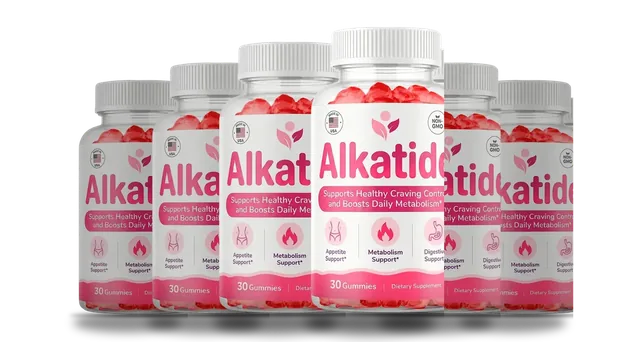
Judge any ACV product on its printed amount.
AlkaTide prints 250 mg. We would rather you weighed that number than trusted an adjective.
$294 for six bottles at $49 each
Order AlkaTide On The Official WebsiteFree US shipping · six digital bonuses · 60-day money-back guarantee · lot ALK-26/AL-1149