AlkaTide Official Website › Blog › ACV And Your Teeth
Apple Cider Vinegar and Your Teeth: What the Case Report Says
There is a published case of dental erosion traced to daily apple cider vinegar. It involved liquid, at high exposure, over a long period, and it is still the reason the AlkaTide label asks you to take each serving with a full glass of water.

- Acid softens enamel temporarily. Enamel does not grow back.
- The case report involved liquid vinegar taken daily for weight loss at far higher exposure than a gummy.
- The single worst habit is brushing straight afterwards, which scrubs softened enamel away.
- Water is the answer, and it is on the AlkaTide label for that reason.
General information, not medical advice. AlkaTide is a dietary supplement for healthy adults 18 and over. It is not a drug, it is not FDA-approved, and it is not intended to diagnose, treat, cure or prevent any disease. If you take medication for blood sugar, have a diagnosed condition, or are pregnant or nursing, speak to a clinician before using any apple cider vinegar product.
Why acid and enamel do not mix
Tooth enamel is the hardest tissue in the body and it has one serious weakness: it dissolves in acid. Below roughly pH 5.5 the mineral surface begins to soften. Saliva re-hardens it over the following half hour or so, which is why an occasional acidic drink is not a problem and a daily acidic routine can become one.
Vinegar sits well below that threshold. So do cola, citrus juice, wine and sports drinks. This is not a vinegar-specific hazard so much as an acid-specific one, and the protective habits are the same for all of them. What makes supplement routines worth singling out is that they are, by design, daily.
The part that matters: enamel does not regenerate. Softening reverses; loss does not.
The case report, in detail
The published case describes erosion attributed to apple cider vinegar taken daily as a weight-loss measure. It is a case report, which is the weakest form of clinical evidence — one person, no control, no way to rule out other contributors.
That weakness cuts both ways, and both deserve stating. It is not evidence that vinegar routinely damages teeth. It is also a documented instance of exactly the harm the chemistry predicts, in exactly the pattern of use this whole category encourages. Taken together with what the 2020 safety review says about adverse effects generally, it is enough to justify three minutes of care rather than none.
How a gummy differs from a shot of vinegar
Meaningfully, in two directions.
- Less acid, shorter contact. 250 mg of apple cider vinegar in a chewable is a fraction of a tablespoon of liquid, and it is not swilled around the mouth. Exposure is substantially lower.
- But it is chewed, and it is sweet. A gummy sits against the teeth while you chew it and carries cane sugar and glucose syrup. Sugar feeds the bacteria that produce their own acid, which is a second route to the same problem.
Net, a gummy is gentler on enamel than a daily vinegar shot and is not risk-free. Anyone claiming a gummy has no dental consideration at all is not reading their own ingredient panel — ours is on the ingredients page.
The one mistake almost everyone makes
Brushing immediately after anything acidic. It feels like the responsible thing to do, and it is the single most damaging habit in this article.
For about thirty minutes after acid exposure the enamel surface is softened. Brushing it in that window does not clean it so much as abrade it. You are scrubbing a surface that has temporarily lost its hardness. Wait half an hour, or brush before rather than after.
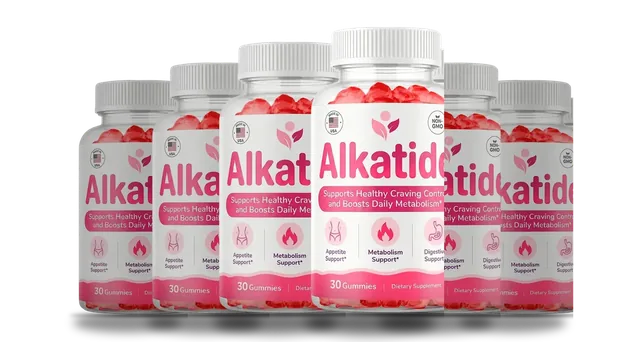
AlkaTide asks for a full glass of water.
That instruction is on the label for a reason, and it is most of the dental answer. One gummy, 8 oz of water, twenty minutes before a meal.
$294 for six bottles at $49 each
Order AlkaTide On The Official WebsiteFree US shipping · six digital bonuses · 60-day money-back guarantee
Six habits that protect enamel
None of these is difficult, and together they remove almost all of the risk this article describes.
- Take the serving with the full 8 oz of water the label specifies. It dilutes and clears acid from the mouth immediately.
- Rinse with plain water afterwards if you have taken anything acidic.
- Wait thirty minutes before brushing. The most important item on this list.
- Never swill or hold it in your mouth. Contact time is the variable that matters.
- If you drink liquid vinegar, use a straw and dilute it properly. Never take it undiluted.
- Take it with a meal rather than on an empty stomach where you can — food and saliva both buffer acid.
The full AlkaTide routine, including timing, is on the how to take it page.
Who should be most careful
Four groups, for whom the ordinary precautions are not quite enough.
- Anyone with existing enamel erosion or sensitivity. Ask your dentist before adding a daily acidic supplement of any kind.
- Anyone with reflux. Your teeth are already meeting stomach acid; adding a dietary source is a conversation worth having first.
- Anyone with dry mouth, whether from medication or a condition. Saliva is the repair mechanism, and less of it means slower recovery.
- Anyone with braces or extensive restorations, where acid pools in places a tongue cannot clear.
NCCIH publishes plain-language pages on supplement safety that are worth reading alongside anything a product website tells you, including this one.
What the AlkaTide label says, and why
The directions read: take one gummy daily with an 8 oz glass of water, for best results 20–30 minutes before a meal, or as directed by your healthcare professional.
Every clause of that is doing something. The water dilutes and clears. The pre-meal timing mirrors how the research was run and puts saliva and food behind the serving. “One” is a limit, not a suggestion — chewing several because they taste good multiplies both the acid and the sugar. And the deferral to your own clinician is the only sensible position for a label to take about your particular mouth.
How to spot early erosion yourself
Erosion is gradual, which is exactly why it is worth knowing the early signs rather than waiting for a check-up to find them. None of the following is a diagnosis — only a dentist can make one, but all of them are reasons to book an appointment rather than to keep going and hope.
- New sensitivity to cold or to sweet things. The most common first sign, and the one people most often put down to a cold snap or a sensitive toothpaste running out.
- Edges of the front teeth looking slightly translucent, particularly at the biting edge where enamel is thinnest.
- A rounded, smoothed look to surfaces that used to have definition, or cupped hollows on the chewing surfaces of molars.
- Fillings that seem to stand proud of the tooth around them. The filling has not risen; the tooth surface around it has gone.
- A duller, more yellow appearance. Thinner enamel lets more of the dentine underneath show through, and dentine is naturally darker.
The useful habit is to look once a month in good light rather than to check anxiously every day. Change is slow enough that a monthly glance will catch it and fast enough that a yearly one might not.
Children, and why this is an adult product
This section is short and it is the most important safety point on the page.
AlkaTide is for healthy adults aged 18 and over. That restriction is on the label, it is on our who it is for page, and it is in the disclaimer at the foot of every page on this website. It is not a formality.
The specific hazard with any gummy supplement is that it looks and tastes like candy. A child who finds a bottle will not ration it, and the result is a large dose of acid and sugar in a mouth whose enamel is still developing — on top of every other reason an adult supplement is not for a child. Keep the bottle closed, out of reach and out of sight, in the same way you would any other adult product in the house.
This is also a reason not to leave the bottle on a kitchen counter as a memory aid if there are children in the house. Pick a visible spot that is still high and closed.
When to talk to a dentist
Stop and get an opinion if you notice any of these after starting any acidic supplement: teeth becoming sensitive to cold or sweetness, edges looking translucent, surfaces feeling rough or looking dulled, or existing fillings starting to stand proud of the tooth around them.
None of that is a reason to avoid apple cider vinegar in principle. It is a reason to have the conversation early, because the difference between softened enamel and lost enamel is time. The NIH Office of Dietary Supplements makes the same general point about supplements and clinicians: tell them what you take.
If you would rather weigh the whole picture before ordering, our who it is for page lists the groups this product is genuinely wrong for, and every pack carries a 60-day guarantee.
References
- Launholt TL, Kristiansen CB, Hjorth P. Safety and side effects of apple vinegar intake and its effect on metabolic parameters and body weight: a systematic review. Eur J Nutr. 2020;59(6):2273-2289. https://pubmed.ncbi.nlm.nih.gov/32170375/
- Gambon DL, Brand HS, Veerman EC. [Unhealthy weight loss. Erosion by apple cider vinegar]. Ned Tijdschr Tandheelkd. 2012;119(12):589-91. https://pubmed.ncbi.nlm.nih.gov/23373303/
- National Institutes of Health, Office of Dietary Supplements. Dietary Supplements: What You Need to Know. https://ods.od.nih.gov/factsheets/WYNTK-Consumer/
- National Center for Complementary and Integrative Health. Dietary and Herbal Supplements. https://www.nccih.nih.gov/health/dietary-and-herbal-supplements

Every page, every journal post, the bottle facts and the ingredients go through review by Dr. Wendy Scinta, MD before they ship. We write these pages from the AlkaTide label and the distributor’s own paperwork, cite public research for apple cider vinegar, and print “not published” wherever a figure is not disclosed rather than estimating it. Where the manufacturer’s own sales page claims more than the label supports, we say so. Corrections are made on the page and the review date moves forward. Write to [email protected]. Last reviewed September 2026 by Dr. Wendy Scinta, MD.